
Reverse osmosis membrane technology
How a membrane element is built, how it filters, and answers to common questions on choosing and using RO membranes.
Technology
Stable performance, high salt rejection, 0.0001 μm filtration
Under pressure, a spiral-wound RO membrane lets water molecules through and holds back fine suspended solids, pesticide residues, heavy metals, bacteria and viruses.
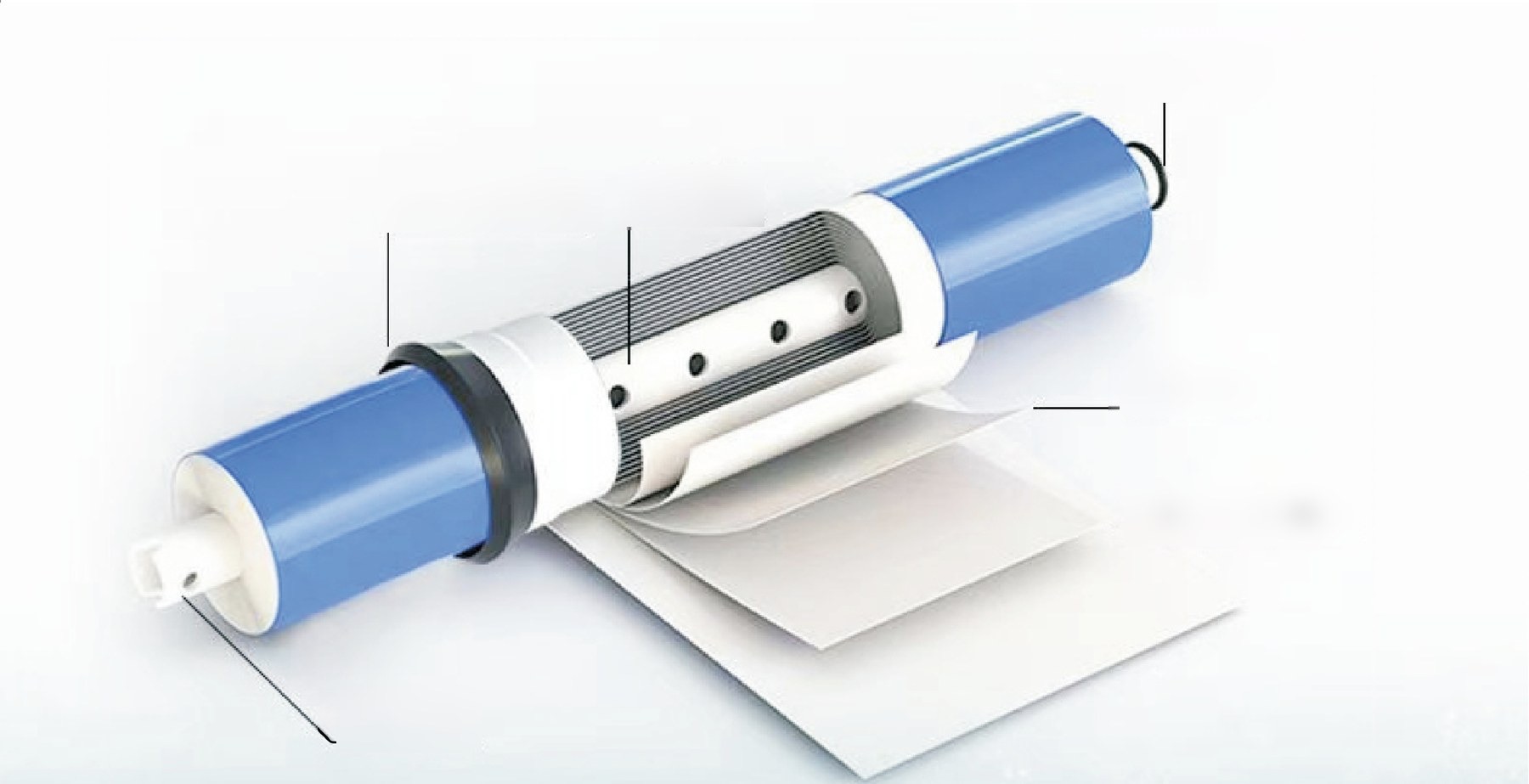
- 1Purified water outlet
- 2Brine seal
- 3Product water tube
- 4Membrane surface layer
- 5Membrane support layer
- 6Feed water inlet
Fine filtration
0.0001 μm pore size
Removes impurities
Holds back suspended solids and colloids
Filters viruses
Retains bacteria and viruses
Removes residues
Pesticide residues and heavy metals
FAQ
Choosing and using RO membranes
What does the model number KGX-3013-400 mean?
KGX is the CONGEXIN membrane series; 30 is the diameter, 3.0 inches (about 7.62 cm); 13 is the length, 13 inches (about 33.02 cm); 400 is the output, 400 gallons (about 1514 L) of product water per 24 hours under standard conditions.
How does reverse osmosis differ from ultrafiltration and nanofiltration?
From coarse to fine, the four membrane types are microfiltration, ultrafiltration, nanofiltration and reverse osmosis. RO is the finest: it holds back dissolved salts and organic molecules above a molecular weight of about 100 and lets water molecules through. Composite RO membranes typically reject more than 98% of salts.
How often should an RO membrane be replaced?
Typically every 12 to 36 months, depending on water consumption and feed water quality. Check and replace the element when output or salt rejection drops noticeably.
How should membrane elements be stored?
Indoors at 5–35 °C, dry, ventilated and out of direct sunlight; never let them freeze or soak. Use wet elements within 6 months of shipment and dry elements within 1 year.
What should I watch for during installation?
Wet the seals with clean water or glycerine only, never lubricants, oil or thinners; check that the brine seal at the feed end opens outwards and that the connector O-rings are complete and undamaged; handle elements gently and never hammer them.
Salt rejection drops while output rises slightly. Why?
Common causes are oxidation damage from chlorine or ozone, a leaking membrane sheet or a leaking O-ring. Keep free chlorine in the feed below 0.1 mg/L; oxidation damage or a leaking sheet means the element must be replaced.
Good water starts with a CONGEXIN membrane
Water purifier brands, equipment makers and distributors are welcome to ask about products, customisation and prices.